Clear Markings That Direct Traffic Safely
Parking Lot Striping and Line Painting in Salt Lake City for facilities requiring ADA compliance and organized vehicle flow
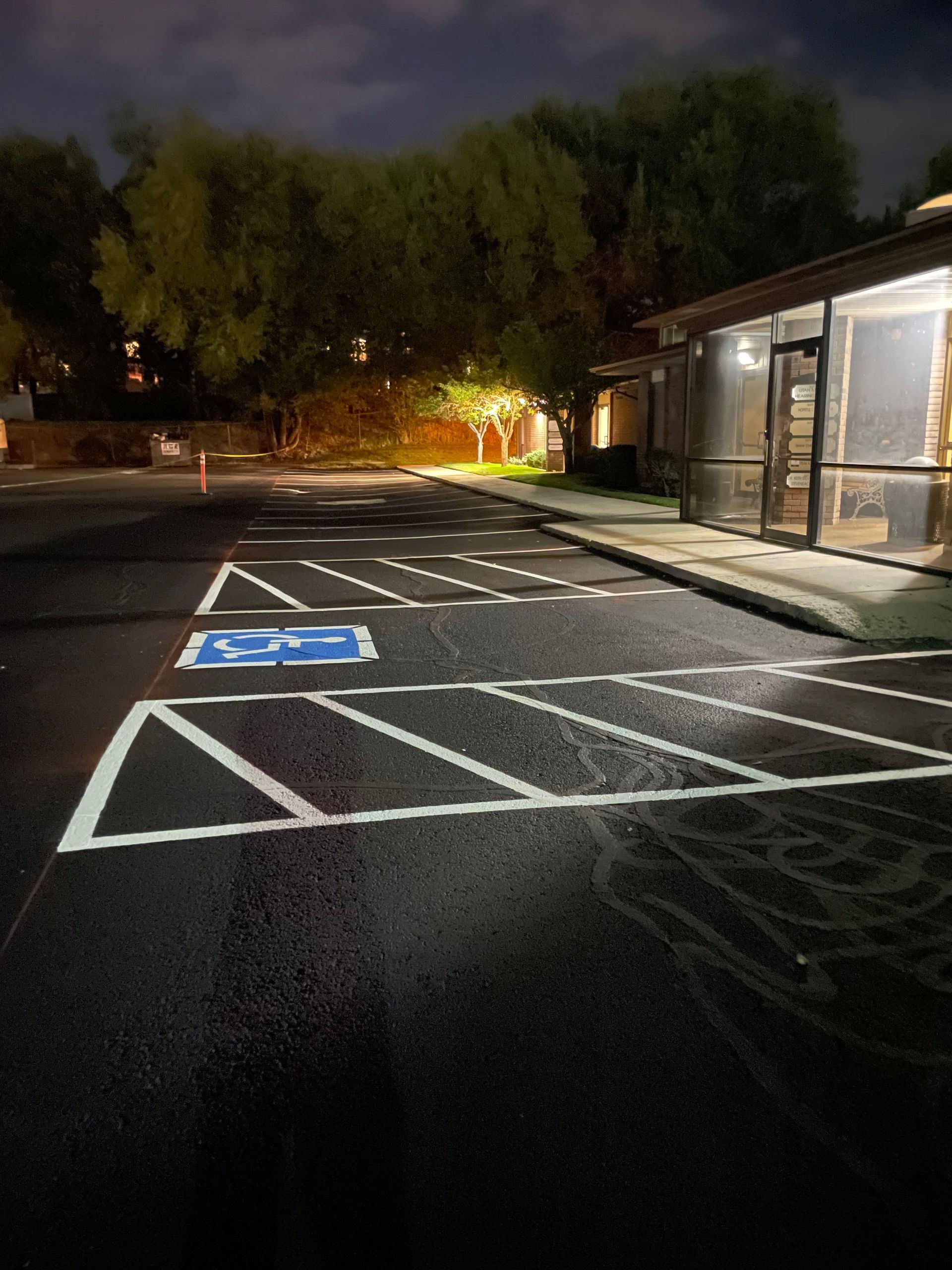
Parking stall lines, fire lanes, directional arrows, and accessible parking symbols wear away from vehicle traffic and weather exposure, leaving properties with unclear traffic patterns that create confusion and potential liability. 24/7 Asphalt applies pavement markings using durable paint formulations designed for vehicle traffic, installing layouts that comply with ADA requirements and local code specifications. You need visible markings that last through winter snowplow activity and constant vehicle movement, which requires proper surface preparation and paint materials formulated to bond with asphalt rather than simply sitting on top where they peel away prematurely.
The striping process starts with planning the layout to maximize parking capacity while meeting dimensional requirements for stall width, aisle space, and accessible parking locations. Old markings get removed or covered, the pavement surface is cleaned of dirt and oil, and fresh paint is applied using specialized equipment that produces crisp, uniform lines. Fire lanes receive red paint or red curbing as required by fire code, and directional arrows guide traffic flow to prevent conflicts at intersections within the parking area.
Set up a site review to assess current marking condition and determine which pavement symbols require refresh or redesign.
What Proper Striping Actually Accomplishes
Professional striping establishes clear parking boundaries that prevent vehicles from taking up multiple spaces or blocking drive aisles, which increases your property's usable capacity and reduces customer frustration. The layout includes required accessible parking spaces with proper dimensions and signage that comply with Americans with Disabilities Act standards, which protects property owners from compliance violations. Custom markings can designate loading zones, employee parking, customer-only areas, or reserved spaces based on operational needs.
After application, drivers see distinct guidance that organizes vehicle movement through your parking area instead of creating informal traffic patterns that lead to congestion and near-miss incidents. Fresh striping improves the professional appearance of commercial properties where parking lot condition influences customer perception of the business itself. The markings also assist with snow removal operations because plow operators can identify lane boundaries and parking areas even under winter conditions.
Warehouse and industrial striping extends beyond parking lots to include interior floor markings that designate pedestrian walkways, forklift traffic lanes, loading zones, and safety equipment locations. These markings use different paint formulations and colors compared to exterior pavement striping because concrete floors and interior conditions require specific adhesion and durability characteristics. Reflective paint or glass bead additives can be incorporated where improved nighttime visibility matters for safety or operational efficiency.
Common Questions About Pavement Markings
Property managers frequently need clarification about compliance requirements, material durability, and
maintenance intervals for parking lot striping in commercial settings.
What makes striping ADA-compliant beyond just painting the wheelchair symbol?
Accessible parking spaces must be at least eight feet wide with an adjacent five-foot access aisle, located on the shortest accessible route to the building entrance, on surfaces with slopes not exceeding 1:48, and marked with vertical signage that cannot be obscured by parked vehicles.
How long does parking lot paint last before restriping becomes necessary?
High-quality traffic paint typically lasts one to three years depending on vehicle volume, weather exposure, and winter maintenance activity, with crosswalks and high-traffic areas fading faster than perimeter markings that receive less wear.
Why do some parking lots use thermoplastic markings instead of paint?
Thermoplastic material is heat-applied and forms a thicker, more durable marking that lasts three to five times longer than paint, which makes it cost-effective for high-traffic areas despite higher initial application costs, though it requires specialized equipment and cannot be removed easily if layout changes are needed.
When should parking lot striping be scheduled relative to sealcoating?
Striping must happen after sealcoating is fully cured, typically 24 to 48 hours after application, because paint won't bond properly to wet or uncured sealant and will peel away as soon as vehicles drive over the fresh markings.
What fire lane requirements apply to commercial parking lots in Salt Lake City?
Fire lanes must remain clear of parked vehicles and be marked with red paint or red curbing along with "No Parking Fire Lane" text at specified intervals, with exact requirements determined by local fire code and site-specific access needs reviewed during permitting.
24/7 Asphalt provides striping layouts that meet accessibility standards while optimizing parking capacity for your property configuration. Contact us to schedule marking installation that improves traffic flow and maintains code compliance for your facility.