Pavement Restoration Without Visible Seams
Infrared Asphalt Repair in Salt Lake City for potholes and surface depressions that disrupt traffic flow
24/7 Asphalt uses infrared technology to reheat existing pavement and blend repairs directly into the surrounding surface, eliminating the visible seams and edge failures that define traditional cold-patch fixes. The process addresses potholes, settled areas, and localized depressions by restoring molecular bonds within the asphalt rather than simply filling voids with new material. Property owners across Salt Lake City recognize completed repairs not by their appearance—because they match the existing surface—but by the absence of water pooling and vehicle jolting that previously marked those areas.
Infrared repair works by heating the damaged section and the surrounding pavement to approximately 300 degrees, softening both to a workable state, then raking and compacting the combined material to create a single, continuous surface. This method reuses the existing asphalt, reducing material waste and transportation costs while producing repairs that flex and move with the original pavement rather than separating at patch edges during freeze-thaw cycles common in northern Utah winters.
Schedule a site assessment to determine whether your pavement damage is suitable for infrared restoration or requires full-depth replacement.
Why Infrared Repairs Outlast Cold Patches
Cold patches fail because they create a permanent boundary between old and new material—a seam where water infiltrates, freezes, and breaks the repair apart within months. Infrared heating eliminates that boundary by blending the repair zone with the base pavement at the molecular level, creating thermal fusion rather than mechanical layering. The repair becomes part of the original surface structure rather than a plug sitting inside a hole.
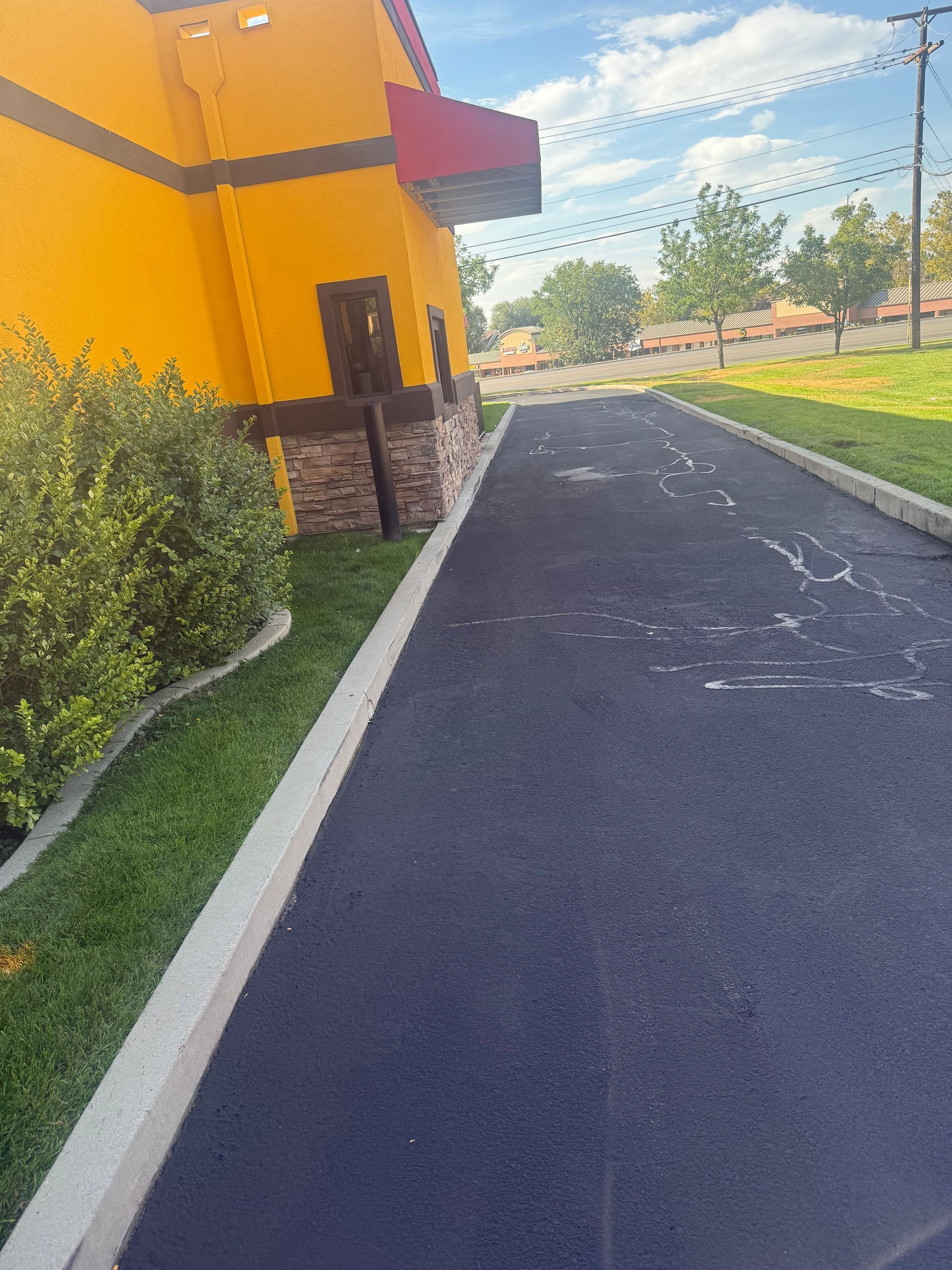
After an infrared repair, you'll notice the patched area is indistinguishable from surrounding pavement in both color and texture, with no raised edges or material separation visible even after multiple seasonal cycles. Water that previously collected in depressions now drains naturally across the restored surface, and vehicles no longer experience the jarring impact or steering pull associated with settled pavement sections.
The process works best on asphalt that hasn't deteriorated to the base layer—once subgrade failure occurs, infrared methods can't restore structural integrity. Repairs also require dry conditions and ambient temperatures above 50 degrees, which limits application windows during Salt Lake City's colder months but ensures optimal bonding when conditions allow.
Questions Property Owners Ask Before Repairs
Infrared repair offers a cost-effective restoration method for localized pavement damage, and understanding how it differs from traditional patching helps property owners make informed decisions about
pavement maintenance.
What makes infrared repair more environmentally friendly than replacement?
The method reuses existing asphalt rather than hauling damaged material to landfills and manufacturing new hot mix, reducing both transportation emissions and aggregate mining. The heating equipment runs on propane, producing lower emissions than the diesel trucks and asphalt plants required for conventional repairs.
How long does an infrared repair remain trafficable?
Repairs cool to ambient temperature within 20 to 30 minutes and can support vehicle traffic immediately after compaction, eliminating the extended curing periods required by cold patches or the traffic delays associated with hot mix deliveries.
Why do some potholes reappear even after professional patching?
Most pothole recurrence stems from water intrusion through patch seams, which freezes and expands during winter months. Infrared repairs eliminate those seams entirely, removing the primary failure mechanism that causes repeat damage in the same location.
What pavement conditions disqualify a section from infrared repair?
Repairs require at least two inches of remaining asphalt thickness above the base layer—once damage extends through the pavement into subgrade material, full-depth reconstruction becomes necessary. Heavily oil-saturated asphalt also resists reheating and bonding, limiting repair effectiveness in areas with chronic fluid leaks.
How does Salt Lake City's freeze-thaw cycle affect repair longevity?
Infrared repairs perform well through temperature cycling because the fused repair zone flexes uniformly with surrounding pavement rather than creating rigid boundaries where differential movement causes cracking. Properties at higher elevations with more frequent freeze-thaw events benefit most from seamless repair methods that eliminate water entry points.
24/7 Asphalt evaluates pavement damage to determine whether infrared technology offers a durable solution or whether conditions require alternative approaches. Request an on-site evaluation to review your specific pavement concerns and receive a detailed repair recommendation.