Stop Water Damage Before Cracks Spread
Asphalt Crack Filling in Salt Lake City for pavement showing linear or alligator cracking patterns
Cracks in asphalt pavement allow water to penetrate beneath the surface where it erodes the base material and expands during freezing temperatures. 24/7 Asphalt seals these openings using hot rubberized crack filler that remains flexible through temperature changes, preventing the cracks from widening with each seasonal cycle. Your parking lot or driveway in Salt Lake City faces constant expansion and contraction as temperatures swing from summer heat to winter cold, and crack filling provides the flexibility to move with the pavement rather than breaking apart.
Hot rubber crack sealing involves heating rubberized asphalt to a liquid state and pouring it directly into cleaned cracks, where it bonds to the crack walls and forms a watertight seal. This material stays pliable instead of hardening completely, so it stretches and compresses as the pavement moves without tearing open again. The process stops minor cracks from expanding into larger failures that require full-depth patching or resurfacing.
Arrange an inspection to identify active cracking before water infiltration damages the pavement base.
What Proper Crack Sealing Requires
The crack must be completely clean and dry before sealant application, which means removing all vegetation, dirt, and old deteriorated filler material using compressed air or routing equipment. Any moisture trapped inside the crack will turn to steam when hot rubber is applied, creating voids in the seal that allow water back in. Clean preparation ensures the rubberized material adheres directly to solid asphalt rather than sitting on top of loose debris.
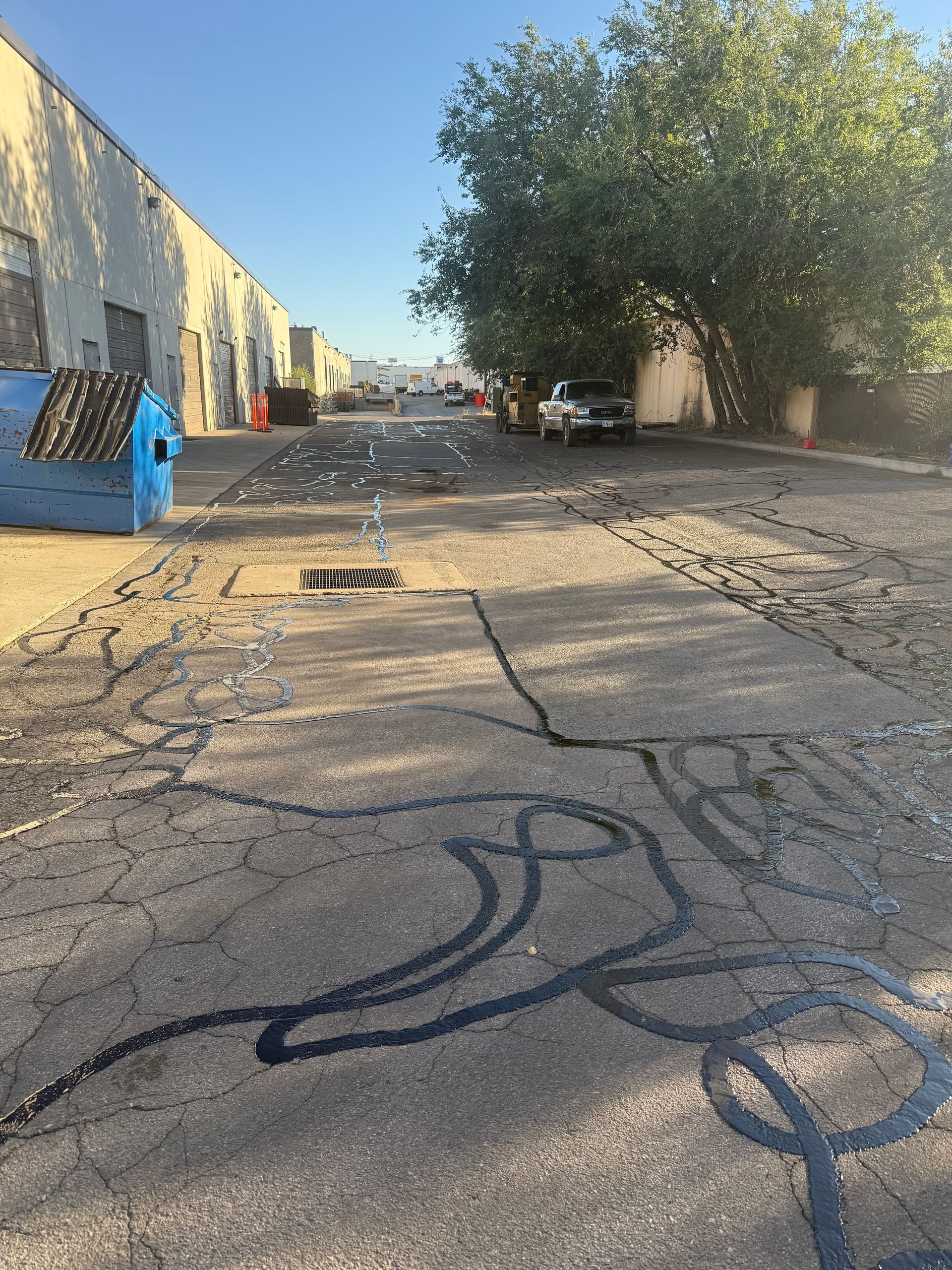
Once filled, you'll notice that water runs off the pavement surface instead of disappearing into cracks where it would saturate the base and cause further deterioration. The black rubber sealant remains visible as a filled line across the pavement, and while it doesn't match the appearance of intact asphalt, it prevents the crack from becoming a pothole or expanding into branching patterns that require expensive reconstruction. Commercial properties benefit immediately because filled cracks eliminate trip hazards in parking lots where liability concerns exist.
Crack filling works most effectively as part of regular pavement maintenance rather than emergency repair after damage spreads. Properties in climates with significant freeze-thaw activity should inspect pavement annually and fill new cracks before winter moisture enters the base material. This approach costs substantially less than resurfacing or reconstruction that becomes necessary when water damage undermines the foundation beneath the asphalt.
Answers Property Owners Need About Crack Repair
Understanding when and how crack filling prevents larger pavement failures helps property owners make cost-effective maintenance decisions.
How does crack filling differ from simple patching with cold patch material?
Hot rubber crack sealing uses specialized heated equipment to apply flexible rubberized asphalt that bonds chemically to the crack walls, while cold patch material simply fills voids without providing a waterproof seal or the flexibility needed to accommodate pavement movement.
What types of cracks should be filled immediately versus monitored?
Any crack wider than one-quarter inch should be filled promptly because it allows significant water infiltration, while hairline cracks may be monitored unless they appear in high-traffic areas or show signs of widening during seasonal temperature changes.
Why do some filled cracks reopen after one season?
If the crack wasn't cleaned properly before filling, if moisture was present during application, or if the pavement continues moving beyond the sealant's flexibility range, the material can separate from the crack walls and allow water back in.
When is the best time to schedule crack filling in Salt Lake City?
Late spring or early summer provides optimal conditions because the pavement has completed its spring expansion from winter freeze-thaw cycles, the cracks are at their widest opening, and warm temperatures allow proper sealant curing before fall weather arrives.
What happens if cracks go unfilled through another winter?
Water entering the cracks will freeze and expand with thousands of pounds of pressure per square inch, forcing the crack wider and breaking off chunks of asphalt at the edges until the crack becomes a pothole that requires excavation and full-depth repair instead of simple sealing.
24/7 Asphalt provides crack sealing for both commercial parking lots and residential driveways where preserving pavement integrity prevents costly reconstruction. Set up a pavement review to assess current cracking and develop a repair plan before winter moisture causes base failure.