Surface Preservation That Extends Pavement Life
Parking Lot Repair & Maintenance in Salt Lake City for properties with surface deterioration and faded traffic markings
Small cracks and minor surface damage escalate into costly structural repairs when water infiltrates base layers and undermines pavement integrity. Property owners avoid this progression by addressing parking lot wear through preventative crack sealing, pothole repairs, and periodic line striping that maintains clear traffic patterns and ADA compliance. 24/7 Asphalt provides maintenance solutions across Salt Lake City that stop minor deterioration before it spreads into base failure requiring full-depth reconstruction.
Parking lot maintenance combines surface preservation techniques—sealcoating to protect the asphalt binder and crack sealing to block water entry—with functional repairs like pothole patching and line striping updates. Each service targets a specific failure mechanism: oxidation, water intrusion, traffic wear, or visibility degradation that affects safety and property presentation.
Schedule a lot inspection to identify current damage and establish a maintenance plan that prevents accelerated deterioration.
What Proper Surface Maintenance Accomplishes
Crack sealing involves routing cracks to create uniform channels, then filling them with hot rubberized material that flexes with pavement movement rather than cracking apart during temperature changes. This prevents the freeze-thaw cycle from widening surface fractures into structural breaks that allow water to erode base material and create voids beneath the pavement. Pothole repairs remove damaged asphalt, compact the exposed base, and fill the cavity with hot mix asphalt that bonds to surrounding pavement edges.
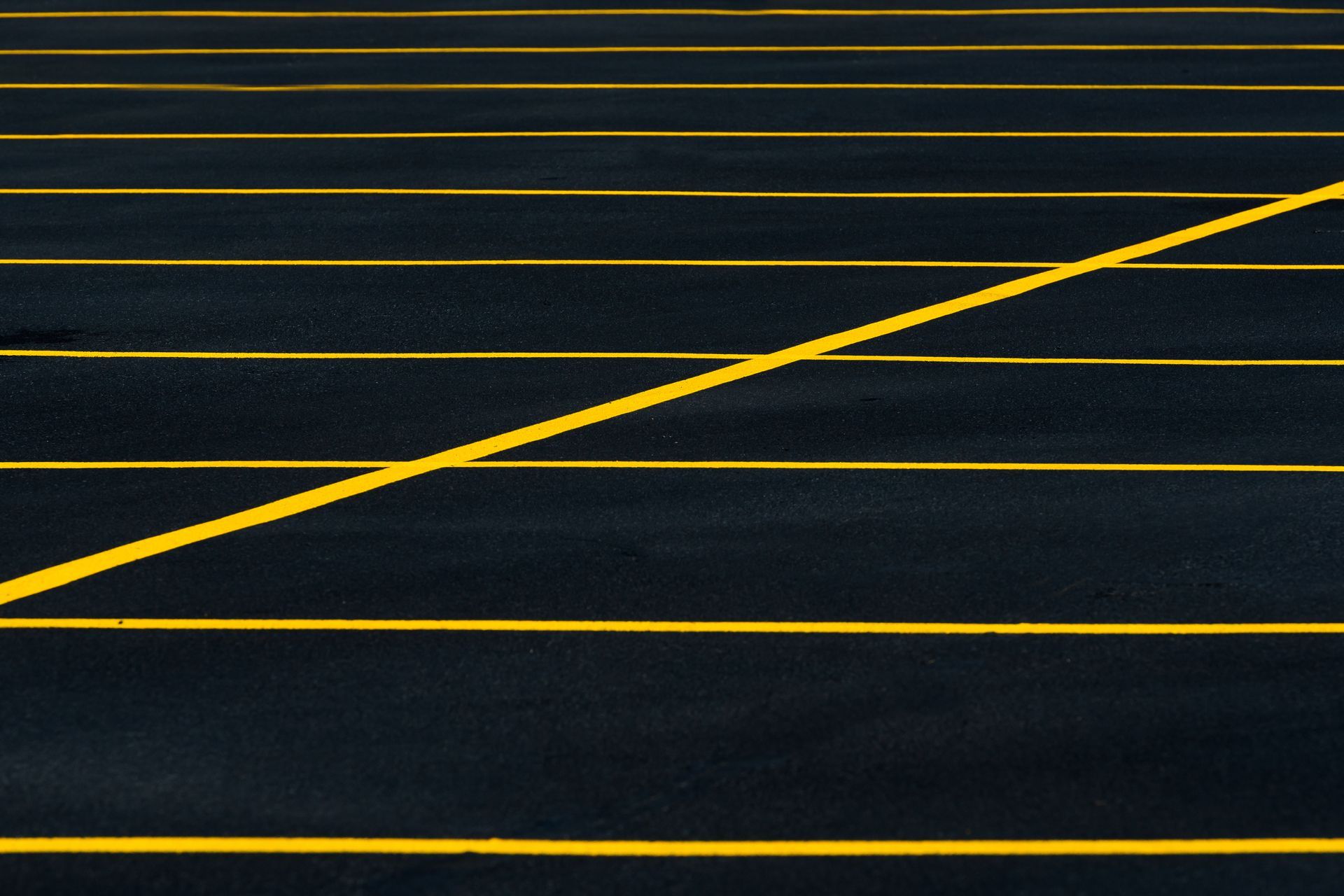
After maintenance, your parking lot sheds water uniformly rather than channeling runoff into cracks where it pools and freezes, and vehicles travel across smooth surfaces free of the jolts and steering pulls caused by settled sections and potholes. Fresh line striping restores traffic flow clarity and parking space boundaries that fade faster than pavement deteriorates, particularly in high-turnover retail lots where constant vehicle movement accelerates marking wear.
Surface preservation doesn't correct underlying base failures or drainage problems—those require reconstruction. Maintenance extends the life of structurally sound pavement by protecting it from the environmental factors that cause premature aging, but it can't restore pavement that has already lost base support or developed widespread alligator cracking indicating subgrade collapse.
Answers to Frequent Maintenance Questions
Understanding which repairs address which problems helps property managers prioritize spending and avoid investing maintenance dollars into pavement that requires structural reconstruction instead.
What's the difference between crack sealing and crack filling?
Crack sealing uses hot-applied rubberized materials designed to expand and contract with pavement movement, while crack filling uses cold-pour products suited for minor, stable cracks. Sealing lasts longer and performs better in climates with significant temperature variation, making it the preferred method for Salt Lake City properties experiencing seasonal freeze-thaw cycles.
How often do parking lot lines need repainting?
Traffic volume determines striping lifespan—retail lots with constant turnover may require annual updates, while employee lots with consistent daily users often maintain visibility for two to three years. Faded striping creates liability concerns when parking boundaries and pedestrian zones become unclear.
Why do potholes return in the same locations after temporary patches?
Cold patches often fail because they don't bond to surrounding pavement and allow water to seep beneath the repair. Permanent pothole correction requires removing all damaged material, ensuring a dry and clean repair cavity, and using hot mix asphalt compacted thoroughly to match surrounding pavement density.
When does surface maintenance stop being cost-effective?
Once pavement develops widespread alligator cracking, multiple potholes, or settled sections across more than 30 percent of the surface area, reconstruction typically delivers better long-term value than continued patching. Individual assessments weigh repair costs against remaining pavement lifespan to determine the optimal intervention point.
How do weather conditions affect repair scheduling?
Crack sealing and sealcoating require dry pavement and ambient temperatures above 50 degrees for proper material adhesion and curing. Spring and fall provide optimal conditions in northern Utah, though summer work is possible during morning hours before surfaces become too hot for effective sealer application.
24/7 Asphalt assesses parking lot condition to determine whether surface maintenance will extend pavement life or whether structural issues require more comprehensive intervention. Arrange a
site evaluation to review your property's specific maintenance needs and receive a prioritized repair plan.