Pavement Programs That Prevent Costly Repairs
Commercial Asphalt Maintenance in Salt Lake City for properties with parking lots showing early deterioration patterns
Retail centers, office complexes, and industrial facilities depend on structured pavement care to avoid the compounding costs of deferred maintenance. 24/7 Asphalt develops sealcoating and crack filling schedules tailored to traffic volume, pavement age, and property-specific wear patterns across Salt Lake City commercial properties. Regular maintenance stops oxidation and water intrusion before surface damage spreads into base layers, where repairs escalate from hundreds of dollars to tens of thousands.
Commercial maintenance involves scheduled sealcoating every two to three years to restore the pavement's protective binder layer, combined with annual crack sealing to prevent water from reaching base material during snowmelt and spring runoff. Properties with high daily traffic or heavy truck loads require more frequent inspections and spot repairs to address stress points before they expand into trip hazards or drainage problems.
Arrange a property assessment to establish a maintenance timeline based on your pavement's current condition and projected wear.
What Preventative Maintenance Actually Prevents
Pavement deterioration follows a predictable sequence: surface oxidation leads to brittleness, brittleness produces cracking, cracks admit water, and water undermines base material until localized failures spread into structural collapse. Sealcoating interrupts this progression by restoring flexibility to the asphalt binder, while crack filling blocks the water entry that drives subsurface erosion. Both treatments cost a fraction of the full-depth repairs required once base failure occurs.
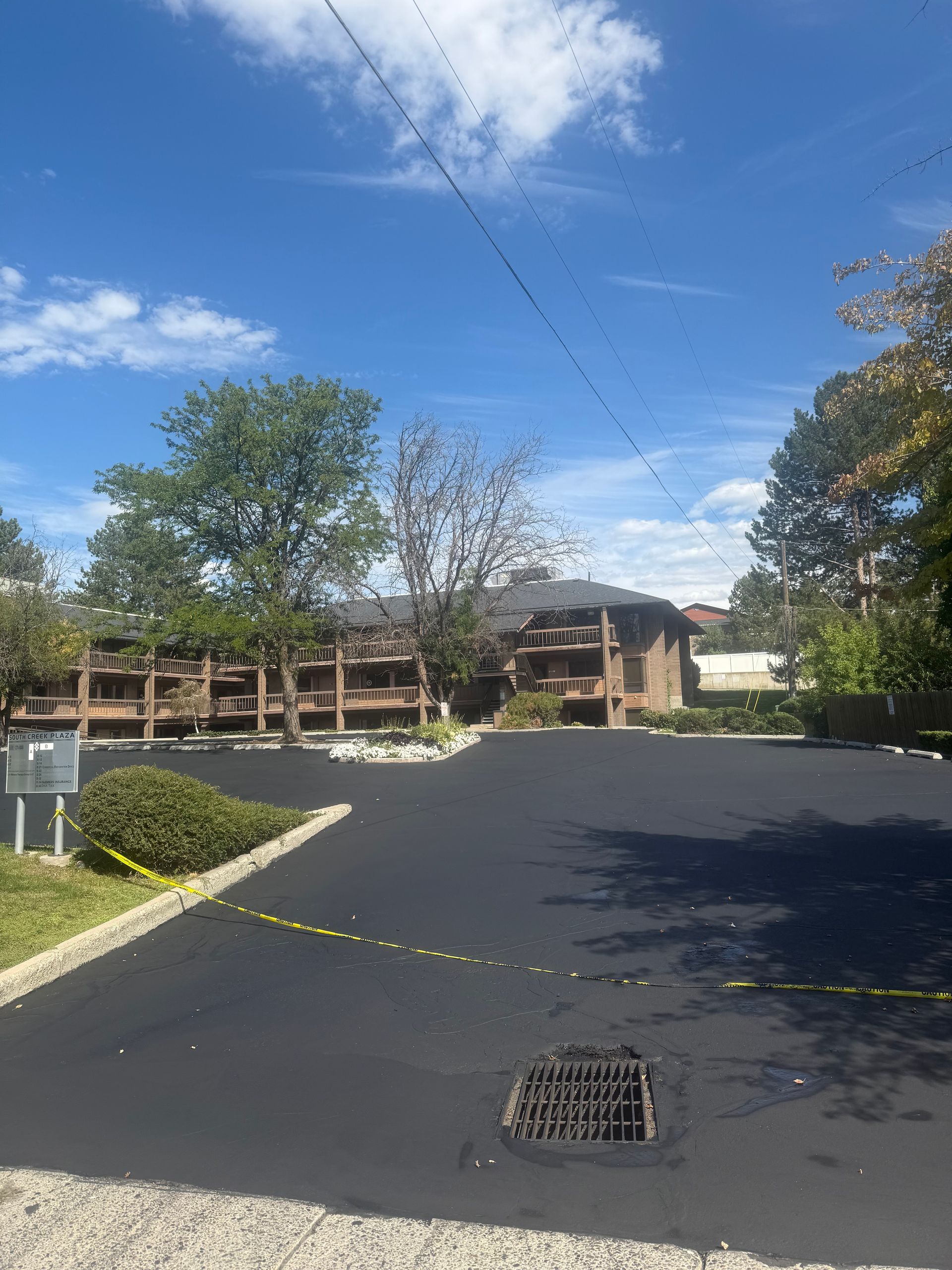
Property managers notice maintained pavement retains its dark, uniform appearance and remains free of the spiderweb cracking and edge deterioration visible on neglected surfaces. Tenants and customers experience fewer vehicle jolts from potholes, and winter snow removal becomes more effective because intact pavement allows plows to make full contact rather than skipping over uneven, settled sections.
Maintenance programs include line striping updates to maintain clear traffic patterns and ADA-compliant parking designations, which often fade faster than the pavement itself deteriorates. HOA and property management clients typically coordinate sealcoating and striping during low-traffic periods to minimize tenant disruption while maximizing pavement lifespan.
Common Questions About Commercial Programs
Structured maintenance programs reduce long-term pavement costs, but implementation details vary based on property type, usage intensity, and budget constraints.
What determines how often a parking lot needs sealcoating?
Traffic volume and sun exposure drive the schedule—high-traffic retail lots with southern exposure lose protective oils faster than shaded employee parking areas with light use. Most commercial properties benefit from sealcoating every two to three years, but site-specific conditions may shorten or extend that interval.
How does Salt Lake City's climate affect crack filling timing?
Spring crack filling addresses damage from winter freeze-thaw expansion, while fall applications seal surfaces before snow and ice arrive. Cracks sealed during warm, dry periods allow optimal adhesion, making late spring and early fall the most effective treatment windows in northern Utah.
Why do some properties develop more cracks than others despite similar age?
Subgrade quality, drainage effectiveness, and construction standards during initial installation determine crack susceptibility. Properties built on poorly compacted fill or inadequate base material develop stress cracks earlier than those with properly engineered foundations, regardless of surface maintenance.
What's included in a typical maintenance visit?
Standard services include crack routing and filling, surface cleaning to remove debris that prevents sealant adhesion, application of coal tar or asphalt emulsion sealer, and optional line striping once the sealer cures. Each visit documents pavement condition to track deterioration patterns over time.
How do maintenance costs compare to full pavement replacement?
Routine maintenance typically costs five to ten percent of replacement expenses annually but can extend pavement life by a decade or more. Properties that defer maintenance face accelerated deterioration that often requires full reconstruction within five to seven years rather than the 20-plus-year lifespan achievable with consistent care.
24/7 Asphalt works with property managers, HOAs, and facility directors to establish maintenance schedules aligned with budget cycles and operational requirements. Contact our team to discuss a customized pavement care program for your commercial property.